
After the Cheque: The Founder Sustainability Problem
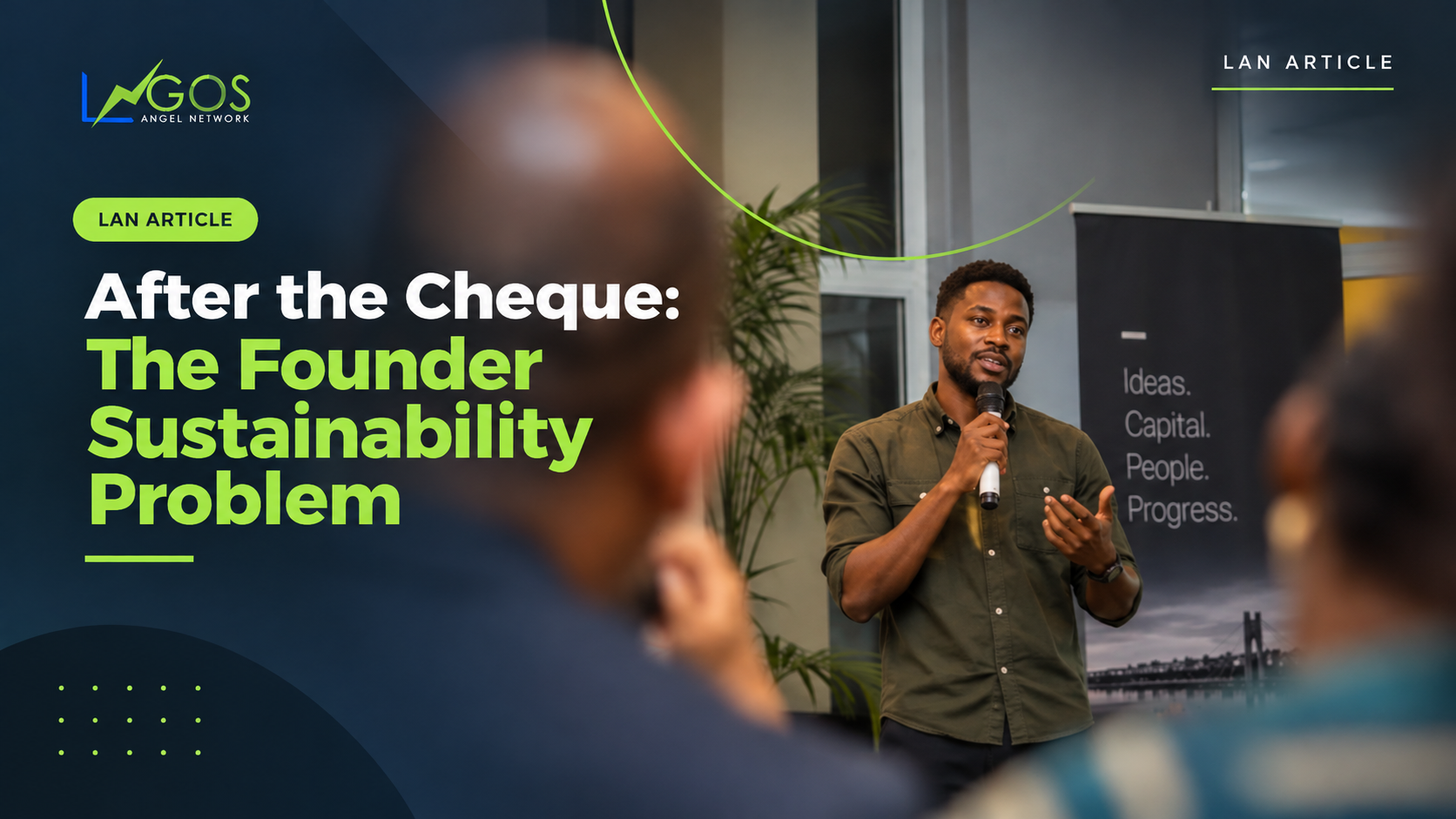
Investors often say they invest in founders, not just businesses. But how do you actually assess whether a founder can stay committed when the business cannot yet sustain them?
It is one of the most repeated ideas in early-stage investing, and one of the least examined. At the pitch stage, commitment is relatively easy to observe. The founder has left their job, committed their savings, is working around the clock. Investors see that as a positive signal. Reasonably so.
But that is current commitment. What early-stage investing actually requires is something harder to assess: whether that commitment can survive the reality of building, the slower revenue, the deferred salary, the funding round that takes twelve months instead of three.
There is a version of this that ends badly. The noise of the raise dies down. The real work begins. And somewhere between month six and year two, quietly and without announcement, the founder starts to drift. The updates get less frequent, then shorter, then stop altogether. The phone goes unanswered. The company is technically still alive, but effectively nobody home.
This is not a rare story. It happens more than the ecosystem talks about. And it is almost always preventable, not by backing only founders with unlimited personal resources, but by asking the right questions before the cheque is written.
That is what this article is about.
Founders Have to Eat Too
The temptation is to frame this as a character problem. The founder talked big and could not deliver. But that framing misses what is actually going on.
Building a company is genuinely hard. The early months after a raise are often the hardest — the pressure to deploy capital wisely, the reality of slower traction than the pitch suggested, the weight of knowing other people's money is on the line. Most founders underestimate how long it takes to get to a point where the company can pay them a living wage. And most investors, during due diligence, never ask.
The result is a silent agreement to pretend the personal sustainability question does not exist. The founder does not raise it because they do not want to seem uncommitted. The investor does not raise it because they do not want to seem intrusive. And so the most important question, can this person actually survive the journey to profitability?, goes unasked until the answer reveals itself in the worst possible way.
Conviction does not pay the bills. And the investors who forget that are the ones who eventually find themselves holding equity in a company where nobody is home.
The Questions to Ask Before You Write the Cheque
These are not questions designed to interrogate a founder's private life or demand certainty about the future. They are questions designed to understand whether the person in front of you has thought seriously about what they are signing up for, and whether the conditions exist for them to see it through.
1. What is your personal sustainability plan?
How are you sustaining yourself before the company can pay you a living wage? Do you have savings set aside? Fixed income from investments? A partner whose income covers the household? A consulting arrangement that does not compete with the business?
There is no single right answer, and financial independence should not become a hidden requirement for entrepreneurship. What matters is whether the founder has genuinely thought through their personal financial reality and how it fits with the company’s timeline. A founder who has thought about this will usually have a specific, considered answer.
If the company needs two years to reach the point where it can comfortably support them, how are they planning to get through those two years? And if it takes longer than expected, what is the contingency? What happens if the business reaches its targets more slowly, the next raise takes longer, or the founder has to go another six or twelve months without a meaningful salary?
The point is not to determine whether a founder has enough money to survive indefinitely. It is to understand whether their personal runway is aligned with the business timeline, and whether they have thought about what happens when those timelines do not match. Because when there is a gap between the founder’s financial reality and the company’s path to sustainability, that gap can eventually show up in the business: in distraction, difficult decisions made under pressure, or a founder having to step away before the company is ready for them to.
2. Where are you in life right now?
Are you about to get married, relocate, buy a house, start a family? Significant personal commitments are not disqualifiers; life happens, and the best founders build through all of it. But they create financial and emotional pressure that competes directly with building, and that pressure is context every investor needs before writing a cheque.
A founder who just relocated to a new city, is planning a wedding, or is about to take on a significant financial commitment is carrying a different set of pressures than one whose personal circumstances are stable. Understanding that does not change whether you invest, but it changes what you watch for, what conversations you have, and what support you offer as the relationship develops.
3. What is your track record?
First time building something? What have you started before and what happened? You are not looking for a perfect record, but for evidence of how you handle responsibility, difficulty, and unfinished work.
Someone who has started and abandoned multiple ventures without honest reflection is showing you a pattern. Someone who has failed, learned, and can speak to it clearly is showing you something else entirely.
And do not stop at what they tell you. Do your own research. Google them. Check their LinkedIn history: how long did they stay at previous roles, do they have a pattern of short stints? Search for previous companies they founded; are those companies still operating, quietly dead, or nowhere to be found? Talk to people who have worked with them before, not just the references they provide, but people you find yourself. Ask those people not just whether the founder is talented but whether they follow through, how they handle pressure, and what happened when things got hard.
A founder's pitch tells youwho they want you to think they are.Their track record tells youwho they actually are.The gap between the two, if there is one, is almost always visible to anyone who looks hard enough.
4. Who is your co-founder and can you count on them?
A strong co-founding team is one of the most important risk mitigants in early stage investing, not just because of complementary skills, but because of what it means when things get hard. Understand who owns what and who does what day to day. What are each person's specific responsibilities?
Does the equity split reflect the actual contribution each person is making? And critically, what happens to the business if one of them steps back?A strong founding team also creates built-in accountability: someone equally invested who can pull them back when discouragement sets in, force the honest conversation when things go sideways, and keep them answerable, to the staff, to investors, and to the work itself. That kind of accountability is often what keeps a founder in the building when everything else is telling them to leave.
5. Who is in your corner, and do you actually listen to them?
Names and titles on an advisory board slide mean nothing. What matters is whether these people are genuinely involved, whether the founder values their input, and whether there is evidence of that input actually shaping decisions.
Ask the founder directly: When did you last speak to your advisors? What did they challenge you on? What did you change because of something they said? A founder who can answer these questions with specificity has a real support network. One who cannot is probably carrying a list of impressive names they call once a quarter to check a box.
A founder surrounded by yes-people is a governance risk. One with genuine advisors who push back, stay involved, and are not afraid to say uncomfortable things is a founder who can be held accountable, and who welcomes it.
6. What would make you walk away?
Do not accept "nothing."Every founder says nothing when you first ask. Push it.
What salary from a larger company would make you consider leaving? How bad would things have to get before you called it quits? If the company could not pay you for two years, what would that look like for you personally? If a co-founder left, could you keep going alone?
The founder who has genuinely reckoned with this question, who can sit with it, think it through honestly, and give you a real answer, is more trustworthy than one who performs invincibility. Because the ones who claim they will never walk away are often the ones who disappear without a word when it gets hard enough.
The question is not designed to plant doubt. It is designed to understand whether this person has looked honestly at the reality of what they are signing up for. That honesty, more than any amount of passion or conviction, is what you are really looking for.
Key Lessons for Angels
- Due diligence is not just about the business it is about the person building it. Most DD frameworks evaluate the market, the model, the traction, and the financials. These things matter. But a strong business with a founder who cannot sustain themselves through the build is not a strong investment. Add the founder's personal situation to your evaluation framework, not as a disqualifier, but as a data point that shapes your risk assessment.
- Ask the uncomfortable questions early. The time to have the sustainability conversation i before the cheque is written, not after the founder has gone quiet. Investors who avoid these questions because they feel intrusive are not being respectful — they are being negligent. A founder who is serious about building will welcome the conversation. One who is not will reveal themselves in the avoidance.
- Governance and reporting are your early warning system. Missed updates, unanswered calls, and unreachable founders are not just communication failures. They are signals. Set clear reporting expectations from the beginning and treat deviations from them as the signals they are. An investor who lets these slide month after month without escalating is not being patient. They are being passive.
- The responsibility of taking outside capital runs both ways. When a founder accepts investment, they accept a responsibility, to keep their investors informed, to be honest about what is happening, and to make decisions that reflect the fact that other people's money is in the building alongside theirs. Angels who articulate this expectation clearly from the start, not as a threat but as a foundation for the relationship, are less likely to find themselves holding equity in a company where nobody is home.
A Final Note
None of this is about blaming founders for finding building hard. As mentioned above, building is hard. The personal cost of it, the financial stress, the isolation, the constant uncertainty, is real and significant.
But the founders who take outside capital have made a commitment. To build it with other people's resources and trust behind them. That commitment deserves to be taken seriously on both sides.
The question is not whether the journey will get hard. It will. The question is whether this founder has thought seriously enough about what hard looks like, and whether the conditions exist for them to stay in the building when it does. For angels, understanding that before the cheque is written is not due diligence overreach. It is due diligence done properly.