Anti-Fragility and the African Angel
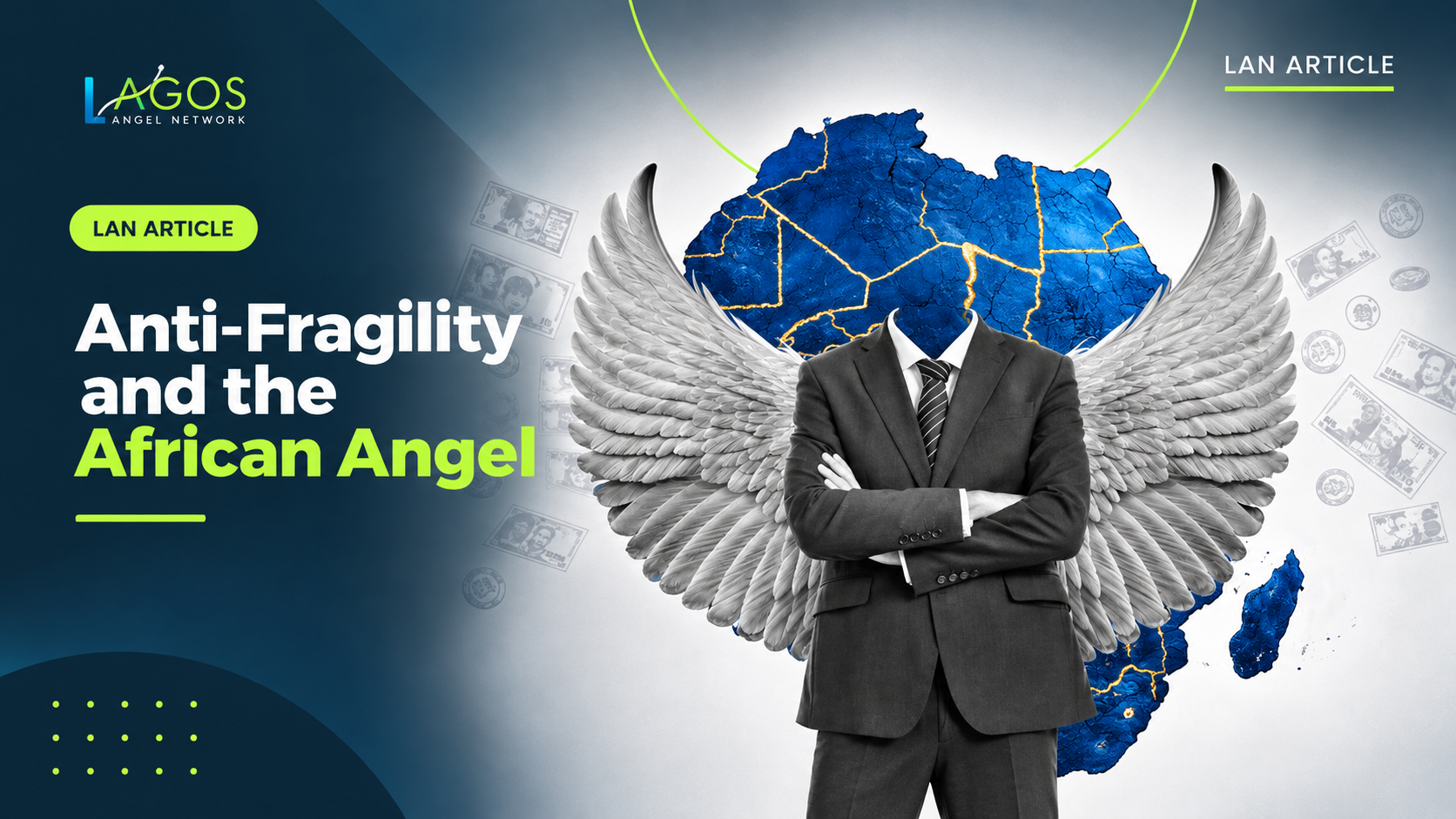
The continent doesn't just test your portfolio. It tests your entire understanding of what risk actually is, and in doing so, makes you a fundamentally better investor.
Nassim Taleb, the Lebanese-American, statistician, and author who spent decades studying how systems fail and survive under pressure, argued that the most valuable thing volatility can do is not destroy you, but strengthen you. He called it anti-fragility: the property of systems that don't merely survive disorder but actually grow from it. Most investors read that idea and nod. Few truly internalize it until a market forces them to.
African markets force you to.
This piece is not a cautionary tale. It is something closer to a love letter, to the discomfort, the uncertainty, and the profound education that comes from committing capital in markets that refuse to behave the way the textbooks say they should.
Risk, As We Were Taught It
Business schools teach risk as something fundamentally quantifiable. You model it, stress-test it, hedge it, price it into your discount rate, and manage it with dashboards. Risk, in this framing, is a variable, uncomfortable, yes, but ultimately tamable. The goal of good investing, by this logic, is to minimize your exposure to it.
This framework works reasonably well in mature markets. When infrastructure is reliable, courts enforce contracts, currency moves are measured in basis points, and your startup's biggest operational challenge is hiring, risk really can be modeled. It is the water, but it is calm water.
African markets are not calm water. And the investors who arrive with a calm-water risk framework tend to struggle , not because Africa is uniquely dangerous, but because their tools were built for a different sea.
A Different Kind of Risk
The risks you encounter here are not exotic. They are structural, and once you understand them, they become navigable. The categories that catch most first-time investors off guard are broadly these.
Regulatory risk: moves faster and with less notice than in mature markets. Policy directives, central bank circulars, and licensing decisions can materially affect a business overnight. There is usually a logic to it , but you need to be close enough to the environment to read the signals before they become surprises. Nothing illustrates this more vividly than what happened to KOKO Networks this past February.
The Nairobi-based clean cooking startup had raised over $300 million from investors, served 1.3 million households through more than 3,000 automated fuel kiosks, and employed over 700 people. Its entire business model rested on selling carbon credits in international compliance markets , a stream of revenue it had spent nearly two years negotiating with the Kenyan government to unlock.
Optimism about those negotiations was still high as recently as 2025. Then, abruptly, a senior Ministry of Environment official effectively killed the deal, and without that single letter of authorization, the company's financial backbone collapsed overnight. World Bank guarantees, Microsoft backing, gold-standard carbon credits, none of it was protection against a regulatory decision that no model had priced in. That is African regulatory risk in its starkest form.
Currency risk: is real and persistent across most African markets. A return that looks strong in local currency can erode significantly by the time it converts. Savvy investors factor this in from the start , structuring where possible in dollar-denominated terms, or at minimum deeply understanding the currency trajectory of the market they are entering.
Infrastructure risk: means founders are routinely building around problems their counterparts elsewhere never encounter: unreliable power, fragmented logistics, inconsistent internet access. This is not a dealbreaker, founders who build through it often produce more resilient companies , but it affects timelines, unit economics, and operational complexity in ways your model has to account for.
Information asymmetry: is perhaps the subtlest risk of all. Market data is thinner, audited financials are less standardized, and the informal economy moves significant value that never appears in any report. Your edge has to come from relationships and local knowledge rather than data alone.
How to Invest Here Without Getting It Wrong
Understanding the risks is the beginning. The angel investors who build strong portfolios do a few things consistently that others do not.
Build market literacy before your first cheque.Spend real time understanding the regulatory environment, the currency dynamics, and the competitive landscape of the specific country you are entering. Nigeria is not Kenya, it is not Ghana. The macro story is continental but the operating reality is intensely local, and your due diligence has to reflect that. The KOKO story is a masterclass here, the company's carbon credit model required sovereign alignment that was never truly secured, and no amount of international backing could substitute for that.
Evaluate founders differently.Add a stress-test dimension to your founder assessment. Ask how they have handled things going wrong , not if, but how. What broke, what did they do, and how fast did they adapt? A founder who has navigated real disruption and come out with their team intact and their model still working is telling you something a clean pitch deck never can.
Structure for optionality.Where possible, favour staged deployment over large single cheques. Preserve your ability to follow on when a founder proves themselves in market, rather than over-committing early on the strength of a plan that has not yet met reality. Milestone-linked tranches are not just conservative , in this environment, they are smart.
Get close to the ecosystem.The best deal flow in African markets does not come from platforms or cold inbounds. It comes from trust , from being known in the community, from backing founders who refer other founders, and from operating within networks where information and opportunity move between people who have already built credibility with each other. When something like the KOKO situation is unfolding, the investors who hear about it first , and understand its implications fastest , are the ones already embedded in the ecosystem.
So What Do You Do With This?
The investors who do well in African markets are not the ones who waited until it felt safe. They are the ones who built the right habits early, stayed close to the ground, and found a community that helped them sharpen their judgment over time.
That is precisely what the Lagos Angel Network is built for. We educate, bringing our members the market literacy, frameworks, and honest conversations that close the gap between outside perception and ground-level reality. We advocate, working directly with policymakers to shape the regulatory environment in ways that make early-stage investing more viable, more transparent, and more predictable. And we do deals, sourcing, vetting, and co-investing in founders who are building companies worth backing.
The continent will teach you things no business school can. We are here to make sure you are in a position to learn.